


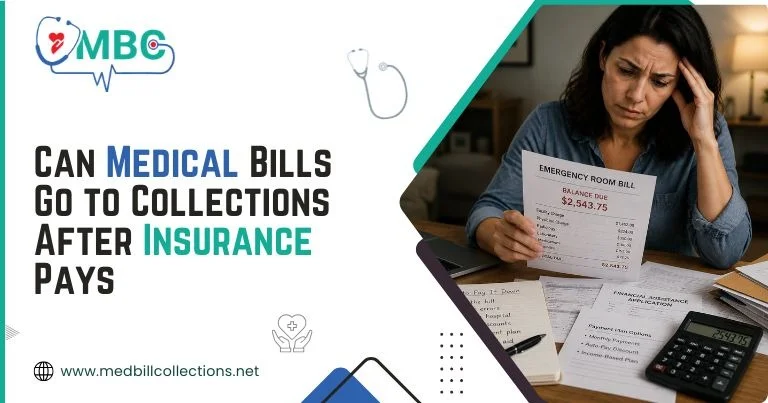
Yes, a medical bill can still be sent to collections even after your insurance has paid its portion. This typically occurs when there are billing mistakes, billing issues with an insurer, or when the patient’s balance is due, such as copay and deductibles are not paid. This is usually correctable if it’s caught early and if you know what to challenge.
What You Should Know
- Even if the insurance company has paid a medical bill, it can still be sent to collections as a result of provider or billing errors.
- Most healthcare providers make an effort to collect the bill within 90 to 180 days after it is past due, before contacting a collection agency.
- If the debt is already covered by insurance, then you can usually have the collection account fixed or removed if you provide proof of payment.
- The easiest way to figure out this happens before it impacts your credit is to review your Explanation of Benefits (EOB) regularly.
Why Does This Happen Even When Insurance Has Paid?
It sounds contradictory, insurance pays, yet the bill still ends up in collections. But this is more common than most patients realize, and it almost always comes down to a breakdown somewhere in the billing process rather than an actual unpaid debt.
Here are the most common causes:
If a claim is processed slowly, a provider can bill before the insurance claim posts to the account, particularly if the provider exceeds the amount of the insurance policy.
Billing Errors
A phantom balance is a balance that shouldn’t exist as a result of incorrect coding, duplicate charges or a claim applied to the wrong account.
Remaining Patient Responsibility
Insurance typically doesn’t pay 100% of a bill. Copay, deductibles, and coinsurance amounts are due and payable by the patient and can lawfully be placed in collections, as can unpaid amounts of copay, deductibles and coinsurance.
Outdated Provider Records
If a provider’s system does not show the insurance payment because of a clerical delay, it could be treated as unpaid, and automatically escalate the account.
Understanding which of these applies to your situation is the first step toward resolving it.
How Long Before an Unpaid Bill Goes to Collections?
Providers generally don’t rush this process. The majority of healthcare organizations have a standard timeline for hiring a collection agency:
- The provider’s initial statement is issued after insurance adjustment, and is due to be paid within 30 to 90 days.
- If the payment is not received, the next step is to send follow-up notices by mail, email or phone.
- A final notice typically states that if the debt has not been paid for a long time, then it may be given to a collection agency.
- The collection time is usually 90-180 days from the bill first becoming delinquent, although this may differ from provider to provider.
This window is significant because patients have time to identify and fix billing errors, such as when they get insurance coverage, and the account is not adjusted properly.
What to Do If Your Bill Went to Collections in Error
Even though you believe that you are covered by insurance, and you see it is showing as unpaid or in collections, don’t ignore it; collection accounts can impact your credit report if not addressed.
Take these steps:
- Request your Explanation of Benefits (EOB) from your insurer to confirm what was paid and when.
- Contact the provider’s billing department directly to point out the discrepancy and request a corrected account status.
- Get everything in writing. Document call dates, representative names, and reference numbers for every conversation.
- Dispute the collection account with the credit bureau if it’s already been reported, including your proof of payment.
- Follow up within 30 days. Collection agencies are generally required to correct or remove inaccurate accounts once proof is provided.
Acting quickly matters. The more that the collection account is outstanding, the more paperwork will be needed to correct it.
Does This Affect Your Credit Score?
It can, but there are some protections in place. In the existing credit reporting system, the medical debt is not reported to the credit bureaus until after it has gone unpaid for a full year, allowing patients time to settle insurance and billing disputes first. Also, when it comes to medical collections, those that are under a certain amount are not usually included on credit reports at all and paid collections are usually removed, whereas many other kinds of collections remain as long as they are paid.
Despite this, an uncollected debt can lead to serious financial troubles, such as denied loans, reduced credit scores, or any number of other complications, so it is better to get it sorted out now rather than waiting for it to go away.
Where This Often Starts: The Billing Process Itself
Many of these issues trace back to breakdowns in medical billing and collections workflows, whether that’s a claim submitted with outdated insurance information, a delay in posting a payment, or a coding error that causes a claim to be processed incorrectly Knowing the process that billing deps follow from claim submission to final payment will help patients realize if something’s gone wrong or if there’s actually a balance due.
This is also where insurance credentialing companies play a quieter but important role. When a provider isn’t properly credentialed with a patient’s insurance plan, claims can be delayed, underpaid, or denied outright — creating exactly the kind of billing confusion that leads to a paid-in-full bill mistakenly landing in collections. Properly credentialed providers tend to see fewer claim processing errors, which in turn means fewer patients dealing with incorrect collection accounts.
The Bottom Line
Yes, medical bills can be put in collections after insurance — but it’s usually an error and not a true debt that needs to be addressed. It’s all about being proactive: check EOBs, maintain records of all payments, and take action in case of discrepancies.
If you have a medical bill in collections that you think you’ve already paid through your insurance provider, check to get your EOB first and then contact the provider’s billing office directly. The best time to protect your finances and your credit is to act early.