


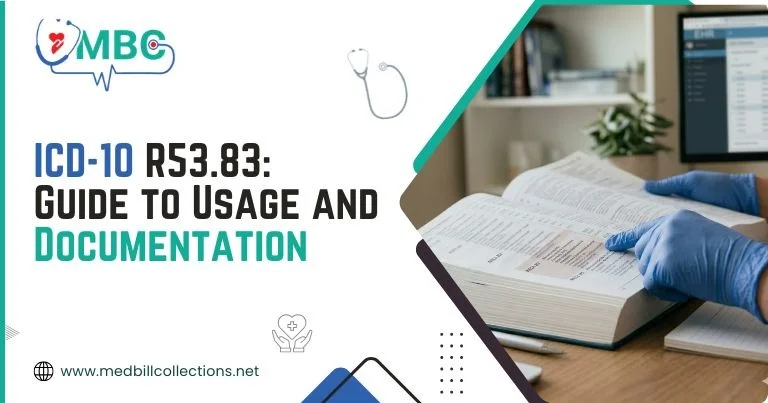
In the world of medical record-keeping, precision is everything. A specialized language of codes is used by doctors and staff to explain precisely what is going on with a patient. One of the most frequently used codes in primary care and specialty clinics is ICD-10 code R53.83. Although it may seem that it is a random combination of letters and numbers, it has a very particular meaning: Other fatigue.
When you have ever been absolutely exhausted of energy, you are aware of how difficult it is to define. The term fatigue is a general term in medicine. This guide will make you understand what this particular r53.83 code of diagnosis means, when to use it, and how to correctly document it.
What is ICD-10 R53.83?
The icd-10 code of fatigue belongs to a bigger chapter of the coding manual, which deals with symptoms and signs. In particular, R53.83 is coded when a patient reports a general feeling of fatigue, exhaustion, or energy depletion that cannot be better explained by a more specific condition.
It is commonly referred to as other fatigue icd 10 since it is a general exhaustion catch-all. It is not to be confused with the general feeling of being unwell called malaise, although the two go hand-in-hand.
Common Terms and Synonyms Used in Coding
When browsing medical charts, you may come across a number of terms that lead back to this code. These include:
- General physical deterioration
- Lack of energy
- Lethargy
- Tiredness
- Fatigue icd10 (standard shorthand)
When Should Doctors Use This Code?
The correct icd code to use when fatigue occurs is based on the specifics of the patient’s visit. R53.83 is an “unspecified” or “other” type of code. This implies that it should be applied in the following situations:
Early Evaluations
When a patient first presents with the complaint of feeling tired, but the reason behind this (such as anemia or thyroid problems) has not been established yet.
Chronic Fatigue Symptoms
When a patient has ongoing tiredness that doesn’t meet the very strict criteria for “Chronic Fatigue Syndrome” (which has its own separate code, G93.32).
Post-Viral Recovery
In case a patient has just had the flu or a cold and is still exhausted.
Exclusion of Other Issues
The exhaustion is not due to the pregnancy, sleep apnea, or a mental health disorder such as depression.
Why Accurate Documentation Matters?
Documentation is the narrative in writing of the health of a patient. In fatigue ICD, the notes should be understandable so that the patient receives the appropriate follow-up care. When a doctor merely writes that a patient is tired, it might not be enough to justify medical examinations such as blood work.
To support the use of R53.83, a medical note should include:
- Onset: When did the fatigue begin?
- Duration: How long does it last during the day?
- Severity: Does it stop the patient from working or performing daily tasks?
- Associated Symptoms: Does it also have muscle pain, dizziness, or difficulty concentrating?
With such details, the healthcare provider will be able to communicate that the fatigue is a major clinical problem that needs to be addressed.
What to Code? Vs What to Avoid?
The most challenging aspect of using the icd-10 code of fatigue is to know when it should not be used. There are “Excludes1” notes in the coding manual. These are notes that inform the user that there are some codes that should never be used simultaneously.
An example of this would be that you should not use R53.83 when the fatigue is caused by:
- Combative behavior: (F05)
- Dementia: (F03)
- Senility: (R41.81)
- Pregnancy-related exhaustion: (O26.8-)
When the fatigue is purely emotional or mental, such as “burnout” or “combat fatigue”, those have other codes altogether. R53.83 is supposed to be used on the physical feeling of being tired.
The Role of Fatigue in Patient Care
Fatigue is a “subjective” symptom. This implies that it is founded on what the patient feels and not something that can be measured with a ruler by a doctor. Since it is subjective, the fatigue icd code is essential in monitoring the development of a patient over a period of time.
In January, with the patient reporting a 7 out of 10 on the fatigue scale, and in March, with the patient reporting a 3 out of 10 on the fatigue scale, the coding helps indicate that the treatment plan is working. It is also a kind of a placeholder.
In most occasions, exhaustion is the initial symptom of a subclinical disease. With the help of R53.83 in the initial few visits, the medical team will be able to order lab tests. When the definite cause is identified, like Vitamin D deficiency, then the code will be changed to reflect the new diagnosis.
How Accurate ICD-10 Coding and Medical Billing Improve Clinic Performance
The proper management of these codes is a large portion of operating a well-run clinic. As soon as the staff members are aware of the peculiarities of healthcare coding, they will be able to avoid making easy mistakes that will result in the rejection of claims. Correct coding means that the time a physician spends hearing the patient air out his or her problems is appreciated.
To most clinics, the paperwork may be overpowering. It is the reason why most offices seek assistance with expert medical billing & collections. Professionals attending to the backend will make sure that all the r53.83 diagnosis codes submitted will be supported by the correct notes, which will keep the office functioning and will allow the doctor to focus all their energy on the patient.
Common Coding and Billing Mistakes to Avoid
Other fatigue icd 10 may present and be made by even experienced staff. The following are some of the things to beware of:
- Using R53.83 for “Malaise”: Malaise (R53.81) is a feeling of general discomfort or “feeling blah.” Fatigue, in particular, is concerned with energy levels. Don’t swap them.
- Forgetting “Excludes” Notes: As it was mentioned earlier, it is wrong to use the general R53.83 code.
- In case a claim is received with a fatigue code only and no explanation of the effect the fatigue has on the life of that patient, some insurance groups may doubt that the fatigue is a medical necessity or that the visit took place
Summary of R53.83 Usage
To recap, R53.83 is a versatile and essential tool in the medical world. It enables providers to record a very actual, very common symptom that is not necessarily immediately explained.
Whether you are a student learning about fatigue icd10, a medical assistant, or a patient looking at your own health summary, understanding this code helps clarify the path to wellness. It acknowledges that being “tired” is a medical concern worth investigating.
By keeping documentation simple, clear, and honest, healthcare teams can provide better care. R53.83 tells the story of a patient who needs more energy, and it starts the process of finding out exactly how to help them get it back. Proper usage of the code ensures that the patient’s journey is recorded accurately from the very first “I’m tired” to the final “I feel better.”